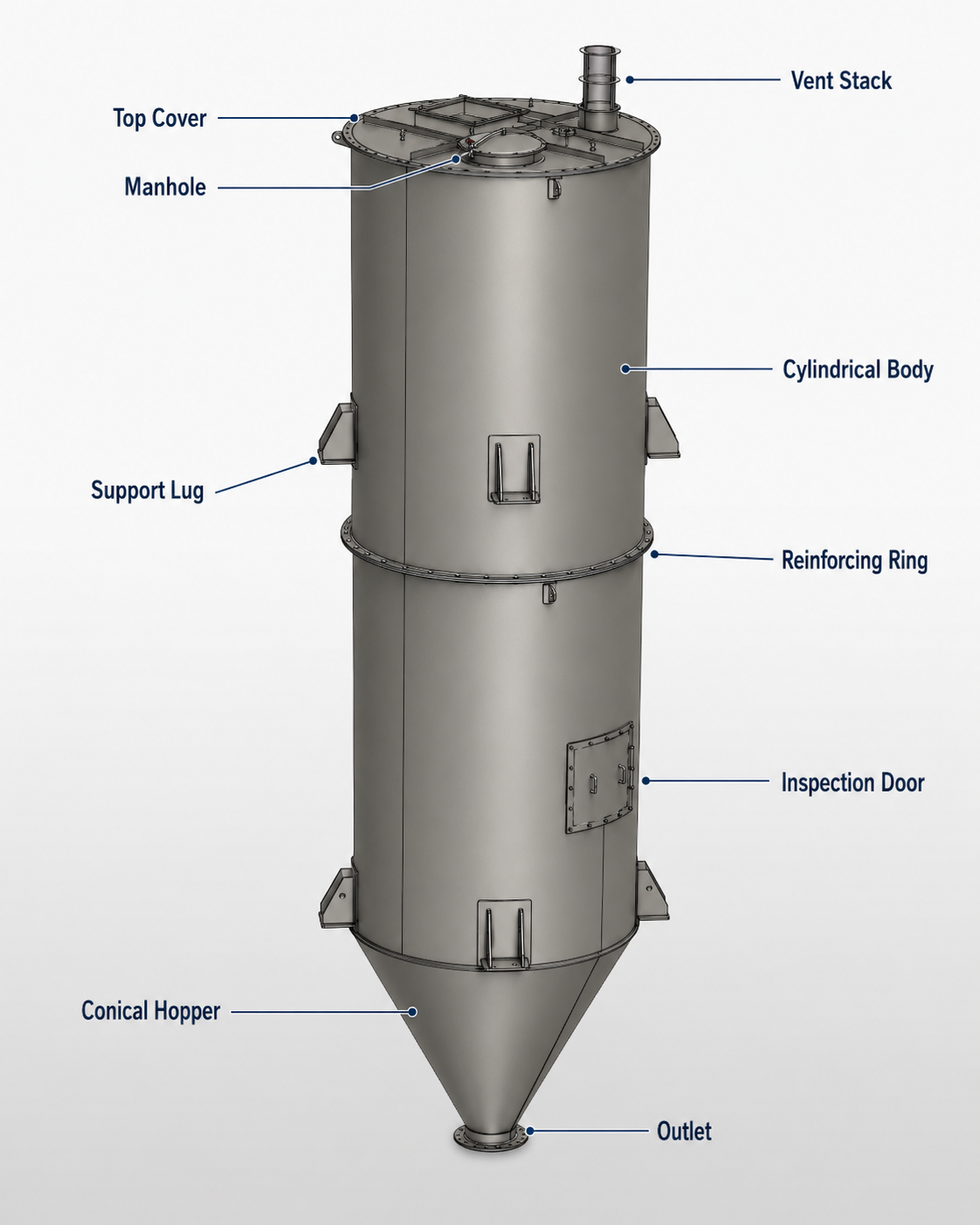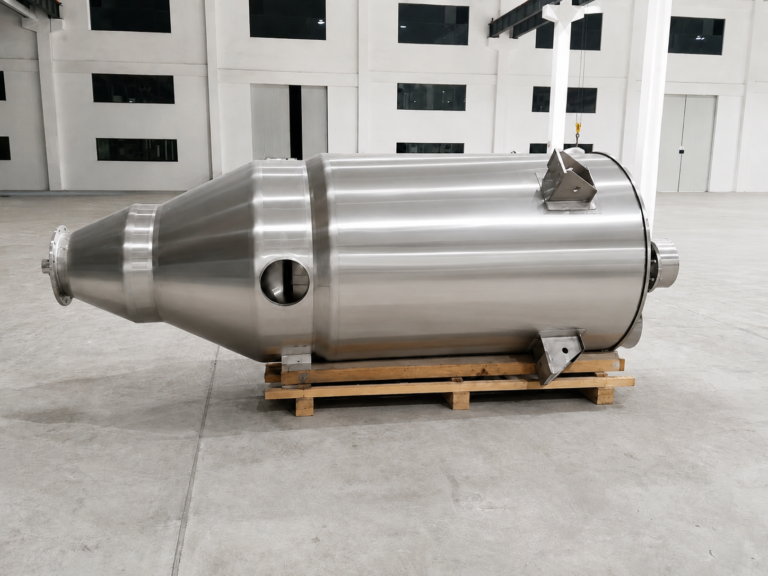
Vertical Storage Silo
Custom body height, cone, support, and process connections.
Stainless steel storage silos for powders, granules, pellets, and process materials that require reliable storage, stable discharge, clean interfaces, and smooth connection with your production line.
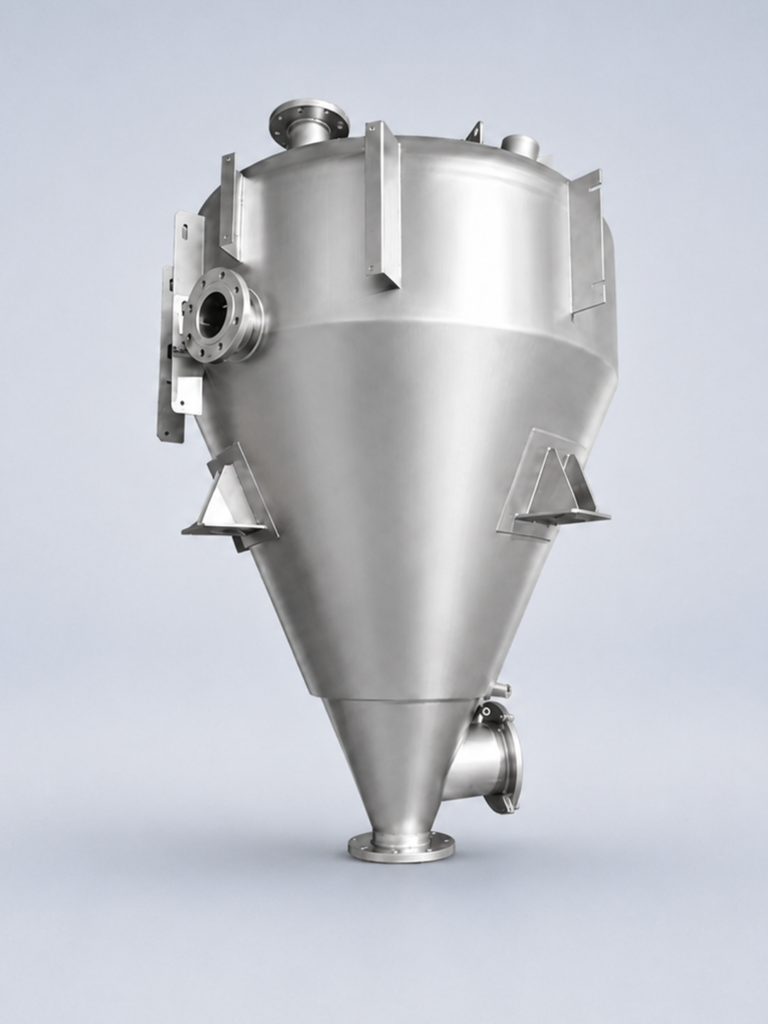
Storage capacity is only one part of the project. Material behavior, usable volume, site limits, cleaning needs, and connected equipment should be reviewed before the main structure is confirmed.
Discharge behavior should be checked before the cone and outlet are finalized.
Batch size, filling ratio, bulk density, and buffer time affect the real storage requirement.
Support height, access space, inlet position, and outlet direction need to work with the surrounding line.
Product-contact finish, access openings, and outlet transitions affect cleaning and changeover.
The cone, outlet, internal surface, flow support, and downstream equipment should work as one discharge path. Reviewing them together helps reduce blockage, residue, and unstable feeding.
Storage silos can be positioned before mixing, weighing, conveying, packaging, or other production steps. The final arrangement depends on the material, required buffer time, and the equipment connected to the silo.
Hold bulk ingredients or process materials before they enter production.
Balance upstream supply with downstream processing or packaging demand.
Feed mixers, weighing systems, conveyors, or other connected equipment.
Provide controlled product supply before weighing, filling, or packing.
Browse selected silo configurations with different body proportions, cone designs, support arrangements, outlet details, and project layouts.
Custom body height, cone, support, and process connections.
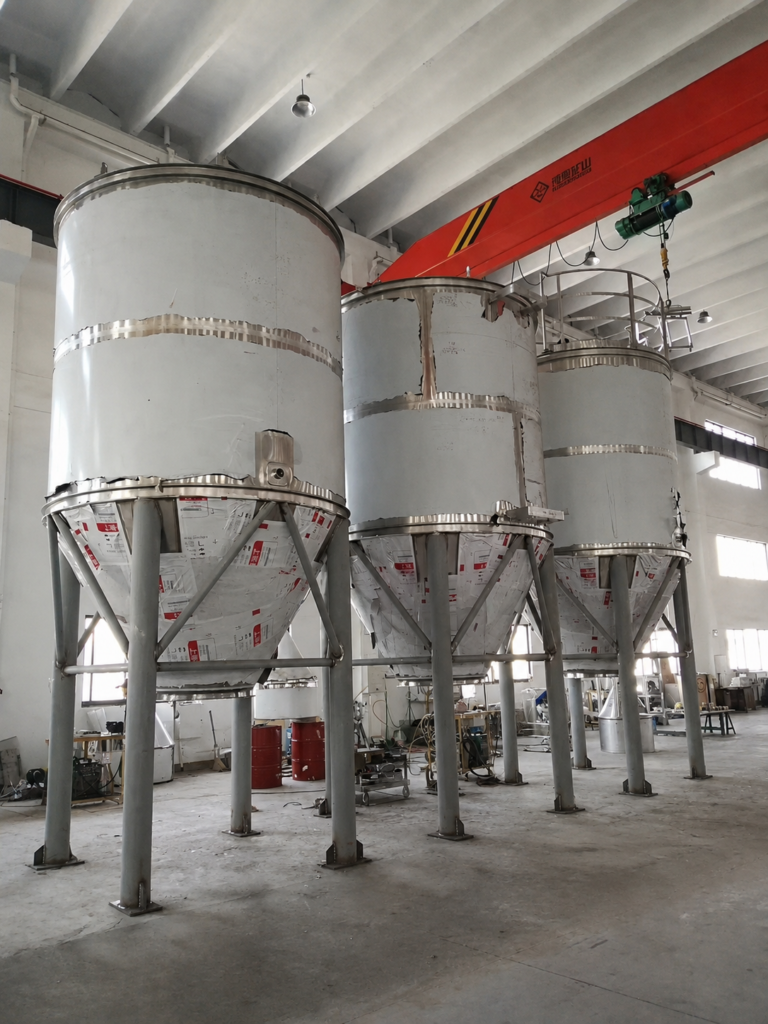
Support height arranged around discharge and installation needs.
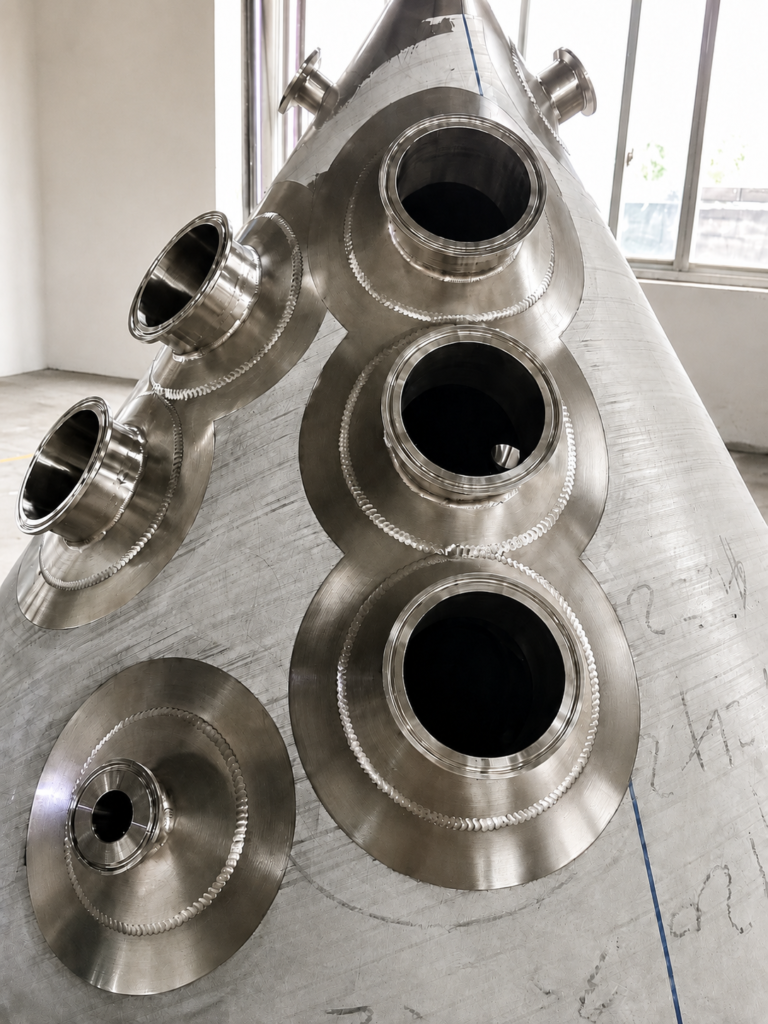
Outlet direction and transition matched to downstream equipment.
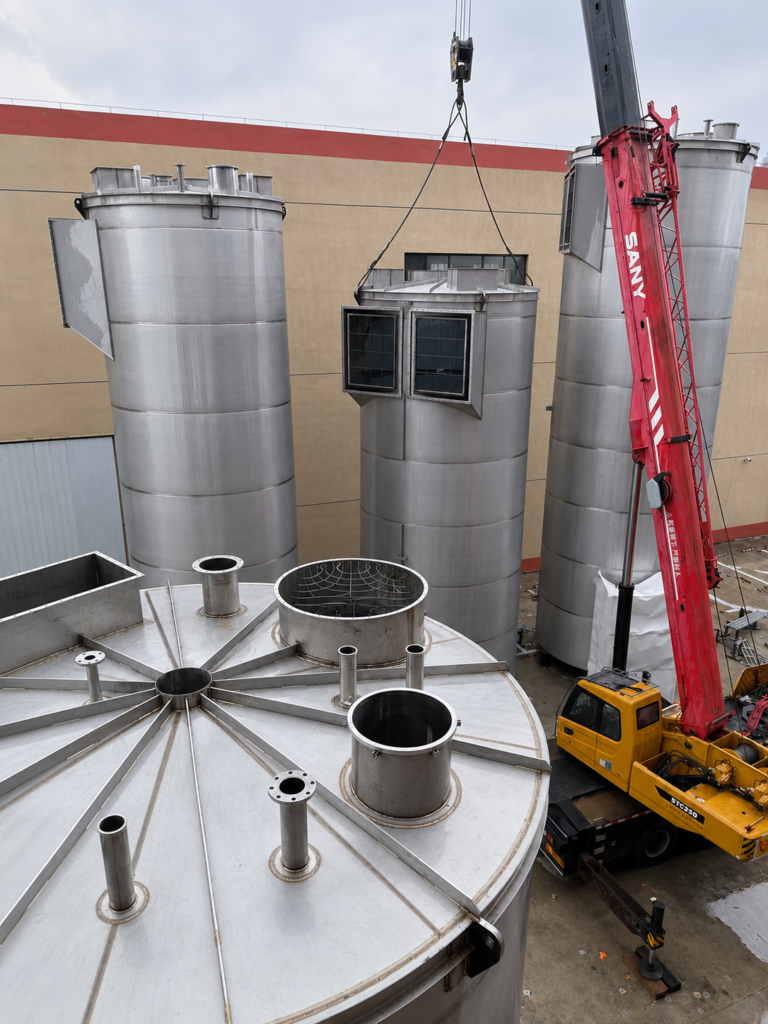
Overall dimensions coordinated with site and transport limits.
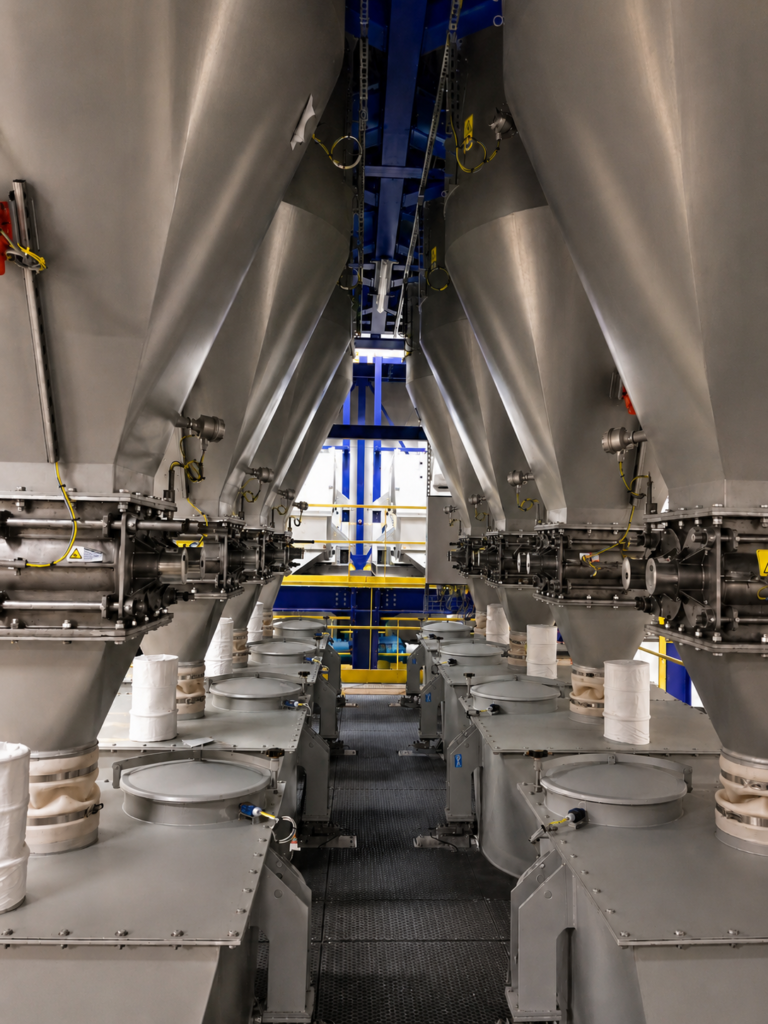
Multiple units arranged around feeding and process requirements.
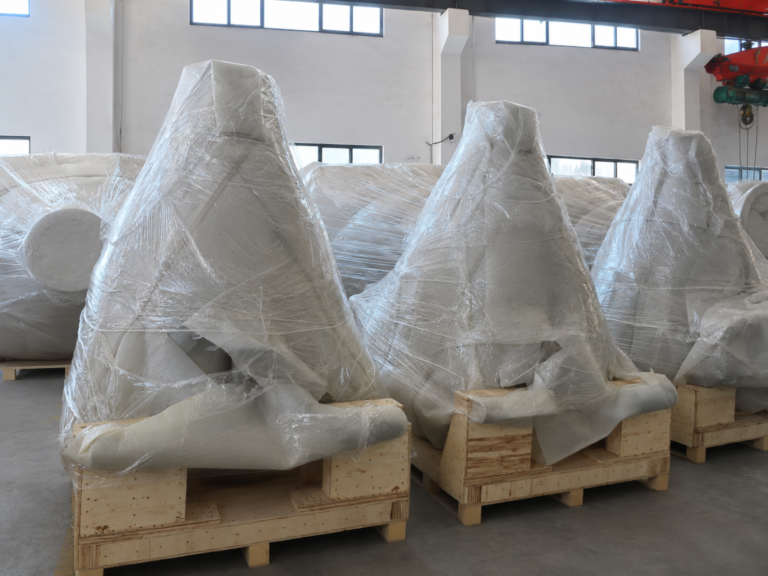
Completed equipment photographed after inspection and preparation.
The body, cone, support, openings, and connected equipment are coordinated before fabrication so the finished silo fits the process, site, and delivery plan.
Dimensions and interfaces are confirmed around usable volume, discharge height, access, cleaning, and the equipment before and after the silo.
Overall height, outlet centerline, support arrangement, process interfaces, surface requirements, and transport limits are checked before production to reduce late changes.
Material, capacity, site limits, loading, discharge, and connected equipment are reviewed.
Main dimensions, outlet centerline, support, openings, and interfaces are confirmed.
Manufacturing follows the confirmed structure, welding, finish, and connection details.
Key dimensions and interfaces are checked before packing is arranged for shipment.
Practical questions that often come up before a custom storage silo project moves into quotation and drawing review.
Even if drawings are not ready, you can share your material, storage purpose, capacity, loading method, discharge method, and available space for a first review.
We will help check the basic silo direction before moving into detailed dimensions and fabrication details.